
Protecting Your Peace As a Parent Around the Holidays
Happy holidays! 🎄✨ It’s Thanksgiving week here in America, and that means we’re gearing up for family gatherings, parties, and more. As we head into this season, it’s not uncommon to hear young parents share they feel an immense amount of shame and guilt around their parenting at family gatherings.
Parents are inundated with comments like:
“He needs to eat his turkey before he gets pie.”
“Go sit at the kids’ table and be quiet.”
“Why won’t she give me a hug?”
“Come on, you can’t tell me what you want from Santa?”
If you're finding yourself dreading holiday gatherings or you end up parenting out of embarrassment, let a developmental expert (me!) give you a reality check. Most of the judgmental comments your family members are throwing at you are completely misaligned with typical child development. So I’m here to set you free so you can actually ENJOY this time of year with your little ones. ❤️
Here are the top reported holiday "expectations" head-to-head with the FACTS, and a solution you can bring to Thanksgiving that'll go over better than green bean casserole… 🥘
the expectation: The Kids Table
children should sit at a table and eat for up to an hour while grown ups are ignoring them in the other room (aka "the kids table" debate)
the facts:
it's developmentally appropriate for a toddler to sit for only 5–10 minutes for mealtime and 8–15 minutes for preschoolers. That means if you serve your child first, go back through the line, everyone gets seated, you say a toast/grace, and dig in? Yeah, time's up. That. Is. NORMAL!!! 🙃
the solution:
if you feel it’s necessary for them to stay seated, bring tabletop entertainment. Think playdough, water books, coloring pages, fidgets, etc. Click here to read more about how I keep my kiddos entertained at the table, plus my favorite toys and activities!
the expectation: Dinner at 2pm?!
All year long, your child eats dinner at 5pm. Now suddenly on a random Thursday, they’re expected to eat dinner at 2pm?
the facts:
children are creatures of habit. They don't "save their calories for turkey" by skipping meals (and tbh, neither should you), and they don't understand that Thanksgiving dinner is something special. So one reason kids are only eating rolls on Thursday? They’re not hungry! 🥐
the solution:
depending on who is hosting, have a conversation about their expectations and the reality. Can we shift mealtime? Or if we have to eat at a certain time, start the conversation around letting the kids play safely in another room instead of forcing them to eat when they're not hungry. They can eat later — it'll be okay, I promise. 🤍 Make sure to set up some entertaining toys (and yes, you are allowed to put on TV, too!)!
For the best holiday themed “busy work” activities, click HERE for a festive freebie!
the expectation: “Go hug Aunt Edna!”
Boomers love to hug kids and they love to go on about "manners” and “respecting your elders.” Children are too often expected to greet strangers (okay, people they haven’t seen since LAST December) with a hug, even go sit on their lap for a family photo.
the facts:
Young children are often shy when meeting new people. Your uncle you only see at the holidays? Sure, you’ve known him forever but to a young child, he’s a brand-new person. It is completely normal for a child to feel hesitant when greeting someone unfamiliar. And to be frank: you should prefer it that way. I don’t know about you, but I highly prefer a little stranger danger versus knowing my child would run up to hug someone completely foreign to them.
the solution:
One thing that helps is to prepare children ahead of time. Show your children pictures of who will be attending, talk about their names. You can even practice a set greeting (“you can wave, say hi, smile, give a high five or give a hug!”) But this is the important part: don’t force them to show affection and allow them time to warm up. They can still be polite by waving or saying hello, but they also deserve the autonomy to decide what they feel comfortable with. Here is a free visual on holiday greetings to use with your littles.
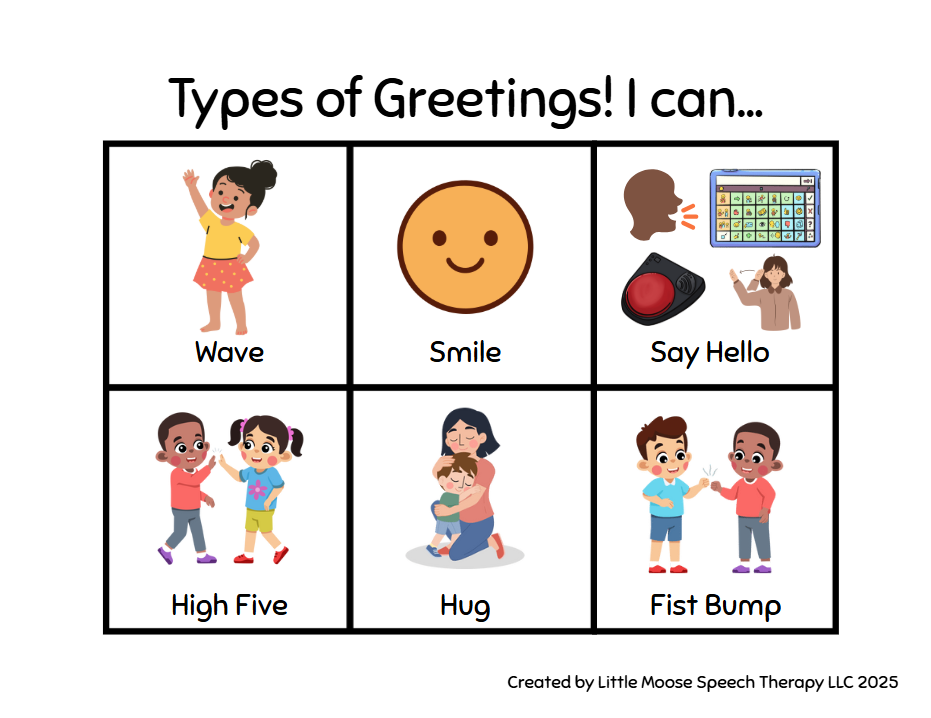
Click the photo to download for free!
the expectation: “Tell me what you want form Santa!”
It’s the most magical time of year! Everyone wants to see Christmas through a little’s eyes, so everyone will be asking “what do you want from Santa?” and a dozen other questions about Christmas traditions.
the facts:
Most toddlers barely understand the concept of Santa beyond “magical man in red suit.” This may be their first year even really getting what “Christmas” is, and even if they’re older and remember, it’s still a lot of pressure. They likely need time to think about their answers and many children feel anxiety around answering “just right”, especially children with communication differences.
the solution:
Consider making a list they can show to people (we love to bring the Amazon Gift Magazine so they can have pictures to point to!), practicing common conversations about Christmas, or just remind the adult: “Yeah, she’s still learning all about Christmas, but she LOVES to play with trucks and read books.”
the expectation: “Try Grandma’s Brussels Sprouts!”
It’s Thanksgiving dinner and the only thing on their plate they recognize is a buttered roll (but it’s shaped different than the ones we have at home, mom!) and macaroni and cheese (but it’s swirly noodles not shells!).
the facts:
Picky eating peaks in toddlerhood and preschool years. Child nutrition experts recommend introducing one new food per meal… and Thanksgiving? That’s like 15 new options per meal. That’s why children default to rolls and mac and cheese — they know those. 🍝
the solution:
Bring safe foods, offer new options without forcing, and model eating other foods yourself. Setting your child up for a healthy relationship with food for life is more important than your Aunt Betty’s opinion about what goes on their plate.
the expectation: No nap today! But also, no pie if you can’t behave!
It happens without fail: the holidays mean wonky schedules and missed naps. And yet, young children are expected to be on their BEST behavior of the year.
the facts:
missing a nap adds hours of dysregulation, impulsivity, and emotional fragility to a system still developing self-regulation. Big feelings are developmentally appropriate for young children. I’ll say that again: BIG FEELINGS ARE OKAY!
the solution:
protect sleep when possible. If you must skip, expect dysregulation and lower the bar for everything else. Offer quiet-time breaks, read your child’s cues, and minimize your expectations.
The Takeaway:
One thing I hinted at throughout this blog, but want to hone in on here: It’s okay to say no. It’s okay to set your schedule. It’s okay to leave early. It’s okay if Great Aunt Linda thinks your kids are “spoiled brats.” Because guess what? They’re not. Channel your inner Mel Robbins this holiday season and if your relatives want to judge your kids for how they behave on the wildest days of the year? Let them. You know your child. You know yourself. You KNOW you’re a good parent. And if you don’t, I’ll keep reminding you. You’ve got this. You’re doing amazing!
At the end of the day, you should enjoy your holiday season and so should your children. You aren’t responsible for meeting the expectations of the adults in your life, you’re responsible for you and your children’s joy, safety and comfortability. I hope that your holiday season is full of what YOU want (& a sprinkle of cookies, snow and magic!!)
